





 Sticky post
Time To Get the Party Started!
Who doesn’t love The Upside Down World? Well, people who haven’t heard of The Upside Down World, of course! And let’s face it, not nearly enough people have heard of The Upside Down World. Which I’m sure we can all agree needs to change. So how ’bouts we go ahead and change that? I’ve been hard at work behind the scenes creating all kinds of … Continue reading Time To Get the Party Started!

How To Lose 50 lbs Without Even Trying! (Or Not)
I lost 50 lbs in 6 months and now weigh less than it says on my driver’s license. How often does that happen? And I wasn’t even trying to lose weight! I haven’t been this size since before I got pregnant with my 16 year old. How awesome is that? Meh, not particularly awesome, actually. Like most people who lose weight quickly without trying, the … Continue reading How To Lose 50 lbs Without Even Trying! (Or Not)
A Bunch of Noah’s in Nashville
Do you know what I don’t like doing? Arguing with conservative Christians. I used to do it. But it’s pointless. Sometimes someone is so many different kinds of wrong that it’s hard to know where to start. And why bother? Arguments have been made, the sides staked out and scripts provided to all involved. It’s just the same conversations over and over again. As is … Continue reading A Bunch of Noah’s in Nashville
 Sticky post
Rules For the Wilderness: Do What You Can
Yesterday I shared a vision of a walled city and falling towers which you should go read if you haven’t already. In the vision, the area around the city was wilderness and in this wilderness people lived according to God’s rather than man’s ways. Over the next few days, I want to explore more about this idea of “God’s ways” and what they look like … Continue reading Rules For the Wilderness: Do What You Can
 Sticky post
The Falling Towers of the Doomed City
A while back a friend shared a vision she was given which I think is incredibly relevant to what is going on in the world right now. Even if you’re not a Christian and don’t believe in anything, this will be interesting to you. The person who was given this vision shared it online but has since taken it down. So I’m sharing it from … Continue reading The Falling Towers of the Doomed City
 Sticky post
Of Strange Gardens and People Living Underground
About 5 years ago, I had the same vivid dream, three nights in a row. In the dream, the world was watched over by a totalitarian power which monitored your every move and word. There was a lot of fear and tension because getting caught saying or doing the wrong thing could get you hunted down and punished. Moving about out in the open was … Continue reading Of Strange Gardens and People Living Underground
 Sticky post
How to Recognize a Brother or Sister in Christ
I have met some of the coolest people while writing this blog. One of these days, I’m going to have to share the story of how God sent some of them to help catch me at the end of my fall last summer. Based on my experience with my readers, I have to assume that if you are reading my blog, you’re probably a pretty … Continue reading How to Recognize a Brother or Sister in Christ
 Sticky post
Me and That Judging Thing
I’ve written a couple of times about what I call “the hardest, best spiritual discipline I’ve ever tried” – that being not judging. Now, this is not something that came naturally to me, to say the least. I’ve always been pretty tolerant and laid-back, but let’s face it; some people are idiots. Some situations are so ridiculous that you pretty much have to be in … Continue reading Me and That Judging Thing
 Sticky post
Why Have Lunatics Taken Over?
Sometimes people come to me and say, “Rebecca, you are amazing, wise, funny and smell like flowers and lemon Pledge. Why are you not recognized as the wonder you are by all of humanity near and far?” To which I can only answer, “this is a great mystery to me as well.” The other questions I get asked a lot are: “has everyone lost their … Continue reading Why Have Lunatics Taken Over?
 Sticky post
Free Will and Its Discontents
OK, so let’s talk about free will. I’ve had several people ask me to explain my understanding of it lately, so apparently it’s a subject of interest. As the conversation usually breaks out, you have free will on one side and determinism on the other. Free will says we make our own choices. Determinism says that everything is decided for us. Free will is a … Continue reading Free Will and Its Discontents
 Sticky post
Dancing The Way
How many of you, at some point in your life, thought that there were two ways to do things; the right way and the wrong way? And that your job was to find the right way. Failing to find the right way might mean being a bad person, being unlovable, being rejected by God, being outside of God’s will or just being a stupid doo-doo head. I suspect a lot of you just raised your hand. I suspect that those of you who didn’t just haven’t dug quite deep enough into your heart to find that particularly nasty snare that gets planted in the heart of nearly every human being along the way.
Now, do I mean to say that there are no wrong ways and no right ways to do things? That all options the human mind can conceive of are equally good? No. Of course not. Going to the spa is a much better way to deal with burnout than doing meth. As anyone who has done meth has probably figured out by now. Hell, smoking weed is a much better way to deal with burnout than doing meth. But not if you are prone to addictions and might be tempted to do meth. Because meth is really, really bad, donchano. (Hey – fun fact: do you know how much weed it takes to kill a rat? Continue reading “Dancing The Way”
 Sticky post
THIS
This is what God would want those who claim his name to hear today. Like really today. Right here in the reality that is whatever day it is right now when you’re reading this. Don’t worry, I’m not claiming to have some “prophetic word” for y’all. Although maybe more people would pay attention if I did. And send me some seed money! Yeah. . .
Allow I to start over . . .
So, I have this prophetic word that God asked me to pass along to y’all. (Click here to make your donation today.) Now, this here is a powerful message I’ve been entrusted with. I’m just repeating things God has told me will be heard and understood by those who put trust in his word and know the one who is the way the truth and the life. (OK, what really happened was I read the bible. You know, like all the stuff in between the 50 verses you can use to win an argument. And this is what I got from it. And obviously I think you should agree with me.)
Before I move on to the body of this here prophetic word, may I take a moment to remind you that while God allows you to enjoy the food from his table freely, it’s always a good idea to do what you can to help him offset the costs associated with an operation like this. (Yes, I know that makes no sense. The less sense you make when asking for money in God’s name, the more money people will send you. And I need a car.)
Click here to make your donation today. I’m not sure how it will work on your taxes, so I won’t come right out and say that it’s tax deductible, but I’m pretty sure any decent tax guy can find a way to make it work.
Now, on to this here prophetic word. (Which sounds best when being read by the intense, commanding voice in your head, btw.) :
God is God. God needs nothing from us. He takes no satisfaction in seeing people willing to make any sacrifice imaginable to protect their understanding of the Christian faith but are unmoved by the site of despair all around them. He’s not interested in hearing our explanations for why our way really is loving, no matter how much our neighbors say that it hurts.
What kind of father is happy that his kid swept the floor while he’s listening to his other son being beat with the broom? What kind of Father do you think we serve? One who doesn’t give a crap about one of his children just so long as his orders are followed? One who elevates service to him above any other concern? If that’s what you think, either you are under the mistaken impression that God is far less good than you are or I feel sorry for your kids. Continue reading “THIS”
 Sticky post
“Whoever Is Not Against Us Is For Us”
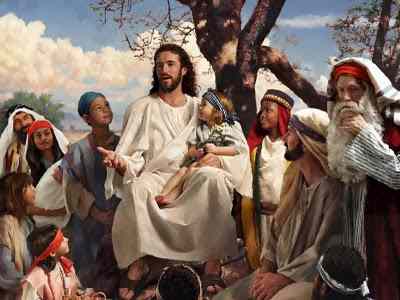
“Teacher,” said John, “we saw someone driving out demons in your name and we told him to stop, because he was not one of us.” “Do not stop him,” Jesus said. “For no one who does a miracle in my name can in the next moment say anything bad about me, for whoever is not against us is for us.” ~ Mark 9:38-40 I have long thought that … Continue reading “Whoever Is Not Against Us Is For Us”
 Sticky post
Suffer Us Little Children
What parent doesn’t want to be a better parent to their kids? And what Christian doesn’t desperately wish to be truly humble? (OK, almost no Christian actually wants any such thing, but play along with me here.) What if I told you that I have the secret to attaining these two highly desirable goals all in one fell swoop? Well, I’d become a viral sensation … Continue reading Suffer Us Little Children
 Sticky post
Three Sinful Paths
Let’s say that you are a new Christian, earnest and eager to follow the narrow path and repent of sin and all its damaging consequences. Which is a good goal. Both the Greek and Hebrew words for sin mean to miss the mark. The mark being union with God. Since union with God is the full fruit of redemption and sin means missing that fruit, avoiding sin is a worthwhile goal. But how to do that?
Well, in general, there are three paths you can take. One will take you to God. One will take you destruction. And one will get you somewhere between the two. Allow me to explain these paths and you see if you can pick out which is which.
The first path is one favored by many in the church. It is to identify sin and target it for elimination. It may mean that you refrain from engaging in worldly activities like drinking, swearing, watching questionable movies, hanging out with friends who are up to no good and the like. Perhaps you get involved in a small group or pursue relationships with more mature Christians as a way of building accountability for yourself.
This path does have its uses, particularly for those who are new to the faith. When a person converts to Christianity, it means adopting a new identity and with it, a new way of life. If your old identity was grounded in being a promiscuous partier who was known for your outrageous antics, it may be necessary to swear off those old behaviors in order to make room for your new identity in Christ.
The danger of this path is that identifying and eliminating sin can become the way you live out your faith and the basis of your Christian identity. Those on this path are too often the public face of the church, defined by what it is vocally against. In fact, the church has no end of self appointed gatekeepers for whom a willingness to identify and target sin for elimination is synonymous with being a faithful Christian. They think they are protecting the church when really all they are doing is attempting to lock everyone in the nursery. Continue reading “Three Sinful Paths”
 Sticky post
Adam and Eve and When It All Went Wrong
Well, it’s been a while since we dropped in on our friends Adam and Eve in the garden. So I figured I might as well make it a week of weird and tell y’all what I’ve been thinking/figuring out about them. For those of you who don’t know, I have a wee bit of an obsession with the creation stories and the story of the … Continue reading Adam and Eve and When It All Went Wrong
 Sticky post
And Now For Something Weird in the End Times
In today’s edition of signs of the end times, we’re going to talk about vanity, the anitchrist, lion’s teeth and Marian apparitions. Among other things. Because part of my calling is to make your brains hurt. But don’t worry, it’ll be fun! And fun is good until somebody pokes an eye out. But I promise I’ll be careful not to poke your eye out. So, … Continue reading And Now For Something Weird in the End Times
 Sticky post
Jesus’ Gift to a Young Rich Man
As [Jesus] was setting out on a journey, a man ran up to Him and knelt before Him, and asked Him, “Good Teacher, what shall I do to inherit eternal life?” And Jesus said to him, “Why do you call Me good? No one is good except God alone. “You know the commandments, ‘DO NOT MURDER, DO NOT COMMIT ADULTERY, DO NOT STEAL, DO NOT BEAR FALSE WITNESS, … Continue reading Jesus’ Gift to a Young Rich Man
 Sticky post
The New Reformation
It occurred to me this morning that perhaps Christianity has been going through a Tower of Babel experience. If you recall your kiddie bible stories, the tower of Babel tells us why there are many languages and peoples. If you don’t recall the details, after the flood, all the men got together to build a great tower. They were able to do this because they had … Continue reading The New Reformation
 Sticky post
Angry Men and Crying Women
In the last few months, I’ve realized something about men and women and why we often struggle with each other. It might not be THE problem, but I would venture to say that it’s certainly been A problem. And figuring this out has been really helpful to me, so I thought I’d pass it on to y’all. It all has to do with the way … Continue reading Angry Men and Crying Women
 Sticky post
When Complaining Is Ministry
I’m one of those people who you should only bring your ideas, plans and dreams to if you’re looking for a solid critique of them. Otherwise I’ll probably give you a seemingly unenthusiastic word of support. Not that I won’t support you, just that I’ll be using all of my self-control biting my tongue because I know you need my support and not my advice. … Continue reading When Complaining Is Ministry
 Sticky post
Addressing Sin the Biblical Way
When the subject of sin comes up – specifically other people’s sin – a lot of people have one go-to-verse/argument: “even Jesus told the woman caught in adultery to ‘go and sin no more’.” These words are particularly helpful when being confronted with something else Jesus said: “do not judge lest you be judged.” Unfortunately, when Jesus spoke those words, he neglected to add all of the … Continue reading Addressing Sin the Biblical Way
 Sticky post
Stop Hurting People
Today, I have something really simple to say; if you hurt people as you move through life, you need to stop. Entirely. Forever. Look, I know that sometimes we hurt people just being who we are. We’re too much for some people and not enough for others. They have expectations we can’t live up to and they feel disappointed and let down. We make choices … Continue reading Stop Hurting People
 Sticky post
Self-Justified vs Justified in Christ
Back in the olden days when I was involved in prison ministry, I learned something remarkable about human nature. We have a nearly infinite capacity for self-justification. Over and over again, I had kids tell me the story of some crime they committed in which they would explain how they had convinced themselves that their actions were justifiable. Some kids were far enough along their journey … Continue reading Self-Justified vs Justified in Christ
 Sticky post
Will the New Covenant Kill the Church?
My 14 year old has a bad habit of trying to engage me in conversations which he really ought to be having with his peers rather than his parents. Because, really, only a teen wants to spend hours sitting around talking about their favorite bands, watching weird, nonsensical videos online and complaining about their teachers. Although I do appreciate that he insisted in introducing me … Continue reading Will the New Covenant Kill the Church?
 Sticky post
Breaking Rules, Following God
There’s a saying in jazz that you have to learn the rules before you can break them. Music has certain underlying structures – rhythms, chords, harmonies, counterpoints, etc. If you don’t understand these structures and the rules that govern how they can come together to make an enjoyable song, you’re going to be a lousy composer. Once you’ve mastered the rules, if you have some … Continue reading Breaking Rules, Following God
 Sticky post
Who’s In Charge Around Here Anyhow?
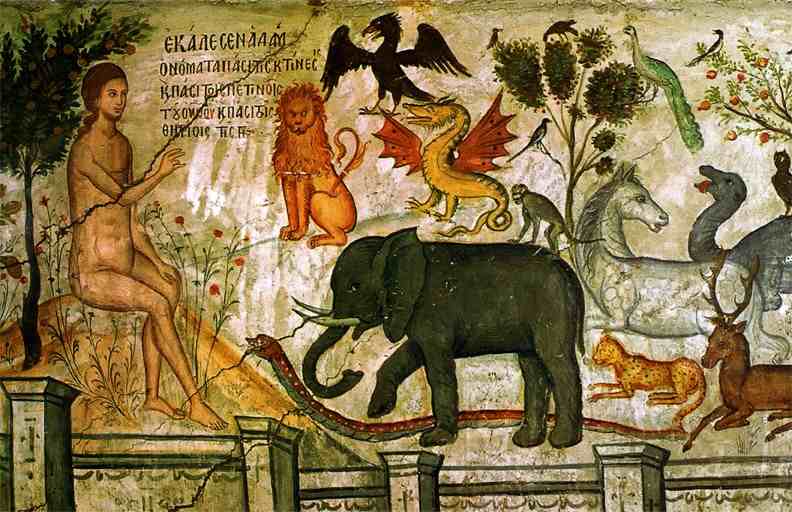
If you’ve been reading my blog for a while, you are well aware that I have a bit of an obsession with the creation stories in Genesis. (No, I don’t read them literally – I take them waaaaaaaaaay too seriously to inflict that sort of nonsense on the text which all but screams “this is a mythological telling, not a history lesson!”) If you could … Continue reading Who’s In Charge Around Here Anyhow?
 Sticky post
We Are One
“As man advances in civilization, and small tribes are united into larger communities, the simplest reason would tell each individual that he ought to extend his social instincts and sympathies to all members of the same nation, though personally unknown to him. This point being once reached, there is only an artificial barrier to prevent his sympathies extending to the men of all nations and … Continue reading We Are One
 Sticky post
Meditate Like Jesus
What if I told you that I held the secret to meditating like Jesus did? And that I have been practicing it with amazing results for 15 years? And I can teach you the secret to meditating like Jesus did. Would you pay me $29.95 for access to an online book explaining the secret of this great mystery? Pay to attend a seminar to learn … Continue reading Meditate Like Jesus
 Sticky post
For When You Can’t Function
Now here’s a subject I know a bit about – not being able to function. By which I mean not being able to engage in normal activities like writing or cleaning or answering emails or having conversations which require saying something other than “uh huh”, “you don’t say” and “I need to go lay down for a little bit”. So, my apologies for the long … Continue reading For When You Can’t Function
 Sticky post
The Least Have the Answers
Back when I was pregnant with my oldest son, I wound up without a place to live. The counselor at the crisis pregnancy center which was helping me navigate this time reluctantly referred me to a homeless shelter/half-way house for single moms as a last resort. She didn’t come right out and say it, but my sense was that she was none too impressed with … Continue reading The Least Have the Answers
 Sticky post
The Tree, The Fish and The Light
Once upon a time, in the deep recesses of time on this planet, there was some slime. Or maybe it was bacteria. Slimey bacteria? I don’t really know. I wasn’t there and I’m not actually a scientist. But there was something alive. It was in water, consumed energy and could reproduce itself. One day, a bit of this slime got left in a puddle on … Continue reading The Tree, The Fish and The Light
Why Parents Should Meditate
Meditation is good for us. The bible tells us to meditate dozens and dozens of times. Modern science has shown that meditation changes the way our brains work and provides a host of physical and mental health benefits. Everyone should learn to meditate. While meditation is good for everyone, it is essential for parents. In fact, I think it is safe to say that if … Continue reading Why Parents Should Meditate
 Sticky post
God’s Gifts
“The wind blows where it wishes and you hear the sound of it, but do not know where it comes from and where it is going; so is everyone who is born of the Spirit.” ~ John 3:8 It’s been a tumultuous few days here in Rebecca’s little world. Of course, what would the holiday season be without major upheavals and breakdowns to add onto … Continue reading God’s Gifts
 Sticky post
Take Courage
I think courage is a terribly underappreciated virtue. There’s a tendency to see courage as something a soldier or a superhero needs to face grave danger, while failing to realize how much courage everyday life requires. You can’t grow as a person or keep a living faith life without ample amounts of courage. The Greek word for courage is tharseo. Jesus uses it four times. … Continue reading Take Courage
 Sticky post
Ego and Pride, Compassion and Healing
Over the last couple of weeks, I have found myself thinking about pride and the ego. There are no end of spiritual teachers who are falling all over themselves to tell us how awful pride and ego are. How they are the root of suffering. How they separate us from God and set us up for a fall. That we can’t live freely and fully … Continue reading Ego and Pride, Compassion and Healing
Loving People, Loving God
One of the readings that day was from 1 John 4:20 which says in part, “If anyone says, ‘I love God,’ but hates his brother, he is a liar; for whoever does not love his brother whom he has seen cannot love God whom he has not seen.” . . . While I can’t say that I hated anyone particularly, this reading challenged me. I … Continue reading Loving People, Loving God
 Sticky post
Of Teen Boys and Scantily Dressed Women
I don’t usually write about parenting, in part because it feels like tempting fate. I’ll write parenting advice and then my kids will end up being drug dealers, pornographers and going out in public dressed like a cartoon pony character. But there are a few things I’m pretty sure I’ve gotten right, so over the next couple of weeks I’m going to be sharing some … Continue reading Of Teen Boys and Scantily Dressed Women
 Sticky post
I Would Rather You Be an Atheist . . .
Some use the text to figure out what love means. Others use love to figure out what the text means. Totally different outcomes. ~ David Hayward aka nakedpastor Last week, someone left a very long, very angry comment on one of my posts railing at what they saw as God’s cruelty, complete with many scripture quotes. I’m not entirely sure if he was an atheist or … Continue reading I Would Rather You Be an Atheist . . .
 Sticky post
A Prayer for Our Journey by H. Nouwen
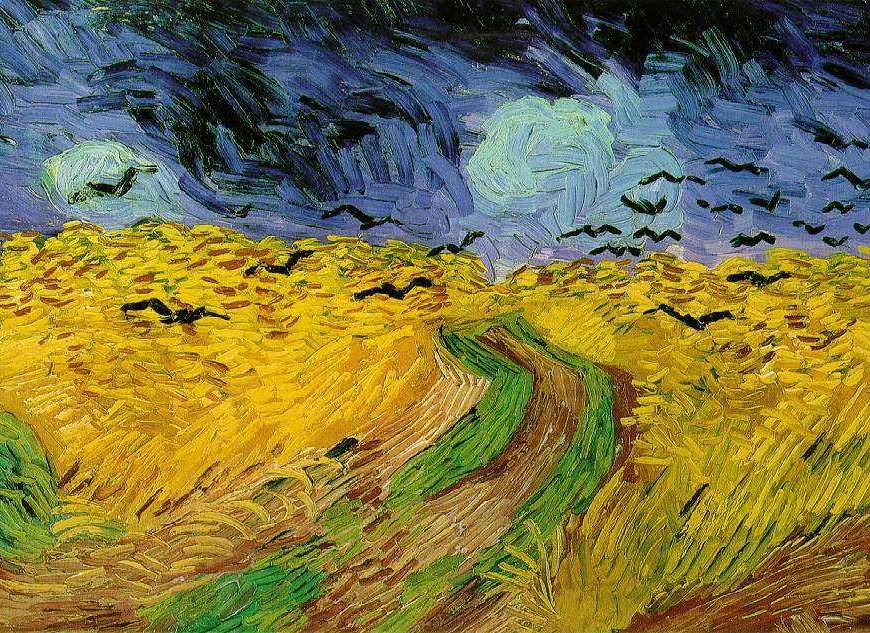
Dear Lord, I will remain restless, tense, and dissatisfied until I can be totally at peace in your house. But I am still on the road, still journeying, still tired and weary, and still wondering if I will ever make it to the city on the hill. With Vincent van Gogh, I keep asking your angel, whom I meet on the road: “Does the road … Continue reading A Prayer for Our Journey by H. Nouwen
 Sticky post
What God Told Me Yesterday
“I want you to know I never believed the things people said about you. Those people who said they could see better than you could what your faults are? I never saw what they thought they were seeing in you. All those times you were told that you are lazy or selfish or undisciplined or a stubborn know-it-all? I always thought the people saying those … Continue reading What God Told Me Yesterday
 Sticky post
Stop Worrying About the Idiots!
Would you like to hear my opinion on the controversy de jour? Listen to me rip some idiot to pieces for your edification and amusement? Want my incisive insight into exactly why and how an outrageous, provocative statement is wrong and probably a danger to decent human beings everywhere? Yeah, sorry. Aint going to happen. Or at least not often. Why? Because a human being … Continue reading Stop Worrying About the Idiots!
 Sticky post
The Most Important Reason for Unanswered Prayers
God often does not answer my prayers because he knows me. He knows that if he allowed me to enjoy material ease, plenty of affirmation and affection from the people around me, a good name and reputation and eased the intensity of my many imperfections, I would be satisfied. But my satisfaction would be in the good life I had rather than in God himself. … Continue reading The Most Important Reason for Unanswered Prayers
 Sticky post
People Are People
This week we’ve been looking at common reasons that God doesn’t answer our prayers. Today we’ll look at the problem of people. As in other people. When people refuse to cooperate, refuse to change or follow God’s leading, prayers tend to go unanswered. Sometimes it can be a matter of people who God would have serve as answers to your prayers not taking up the … Continue reading People Are People
 Sticky post
Reality is Reality
Especially when I was younger, I was prone to saying prayers that amounted to “God, please don’t let reality be reality.’ I would not prepare for a test and ask God to help me do well on it anyways. I would wake up late and ask God to somehow make the 5 minutes I had extend to the 15 minutes I needed. And if the … Continue reading Reality is Reality
Important Update for Readers
The Upside Down World has undergone some major changes lately which included moving the entire site from WordPress to Wix. If you are reading this in your email, you don’t have to do anything, you will continue to be notified when new posts go up. However, if you have been keeping up with The Upside Down World through your WordPress reader, you will no longer … Continue reading Important Update for Readers
Check Out The Desert Sanctuary
I may or may not have shared my plans for world domination with all of you yet, but it’s going to entail me running my mouth even more. Starting with podcasts. Like this one I recorded last night with Karl Forehand for his podcast The Desert Sanctuary. (You can also find The Desert Sanctuary on Spotify.) Karl is a former pastor who blogs on Patheos’ … Continue reading Check Out The Desert Sanctuary
Sunday Sermon Episode 10 Is Up!
Did Jesus Really Multiply Fishes and Loaves? Does It Matter? This week’s Sunday Sermon episode is up over on my patreon page – free for all! No sign-up required. I hope you’ll check it out. This week I share my thoughts on why I don’t believe most Christians when they tell me that they value the spiritual more than the material. If you have fallen … Continue reading Sunday Sermon Episode 10 Is Up!
“Love Isn’t A Feeling – It’s An Ability”
Sunday Sermon Episode 8 is up! These are sermons the way they’re meant to be – short, sweet and deep. If you’ve missed past episodes, they can all be found by clicking the link below. Continue reading “Love Isn’t A Feeling – It’s An Ability”
Sunday Sermon Episode 6 Is Up!
“Faith, Doubt and Love” This week I share what I learned about what my faith is really made of from walking right up to my doubts and facing them. I hope you will take a listen and pass it on! Continue reading Sunday Sermon Episode 6 Is Up!
Sunday Sermon Episode 5 Is Up!
John the Baptist says to stop being an arse . . . This week’s Sunday sermon is up. The subject this week is “John the Baptist says to stop being an arse” and includes naked chicken throwers so you’re definitely going to want to go check it out and share it with all your family and friends and randos on social media. Continue reading Sunday Sermon Episode 5 Is Up!
Sunday Sermon Episode 4 Is Up
Who Are We? (Your Answer Is Probably Wrong) This week’s Sunday Sermon is up over at The Upside Down World’s Patreon page. This week I’m discussing why it’s so important to ground our concept of ourselves in original blessing rather than original sin. I hope you’ll take a listen and let me know what you think! Continue reading Sunday Sermon Episode 4 Is Up
Sunday Sermon Episode 3 Is Up!
It’s the beginning of a new year, so I thought it would be a good time to take another look at the beginning of our faith story. I hope you’ll take a listen to my theory that Genesis 1 is told from the perspective of emerging consciousness and let me know what you think! Continue reading Sunday Sermon Episode 3 Is Up!
Sunday Sermons Episode 2
Jesus Saved Our Christmas Dinner I hope everyone had a lovely Christmas yesterday! In the spirit of the Christmas season, which just started according to the traditional liturgical calendar after all, I’m sharing a story of how Jesus saved my family’s Christmas dinner and what he has to say about choosing to go last. Just click the text anywhere and it will take you to … Continue reading Sunday Sermons Episode 2
Sunday Sermons Start Today!!! Check it out!
If you’re reading this right now, odds are excellent that you’ve followed The Upside Down World for quite a while. My audience is kind of small, but mighty. I’ve been writing here off and on for over a decade but at some point, I had to do a cost-benefit analysis for writing all these essays that weren’t getting the sort of eyes on them that … Continue reading Sunday Sermons Start Today!!! Check it out!
 The Upside Down World